
WEEKLY NEWSLETTER
The $25,000 Website Audit You Can Do Free

© CURRENT YEAR, AI Business Lab. All rights reserved.
More traffic to a site that doesn’t convert is just faster failure. Fix your site first.
Last week, I got off a call with one of my private coaching clients feeling unsettled.
Their revenue had been flat to declining for eighteen months. They’d tried everything. A new copywriter had sharpened their emails—open rates and click-throughs climbed. A webinar drew a good crowd; the energy was real. They posted consistently on social media, pointing people to their website. Each tactic showed some promise. None moved the sales needle.
After we hung up, I went to their website.
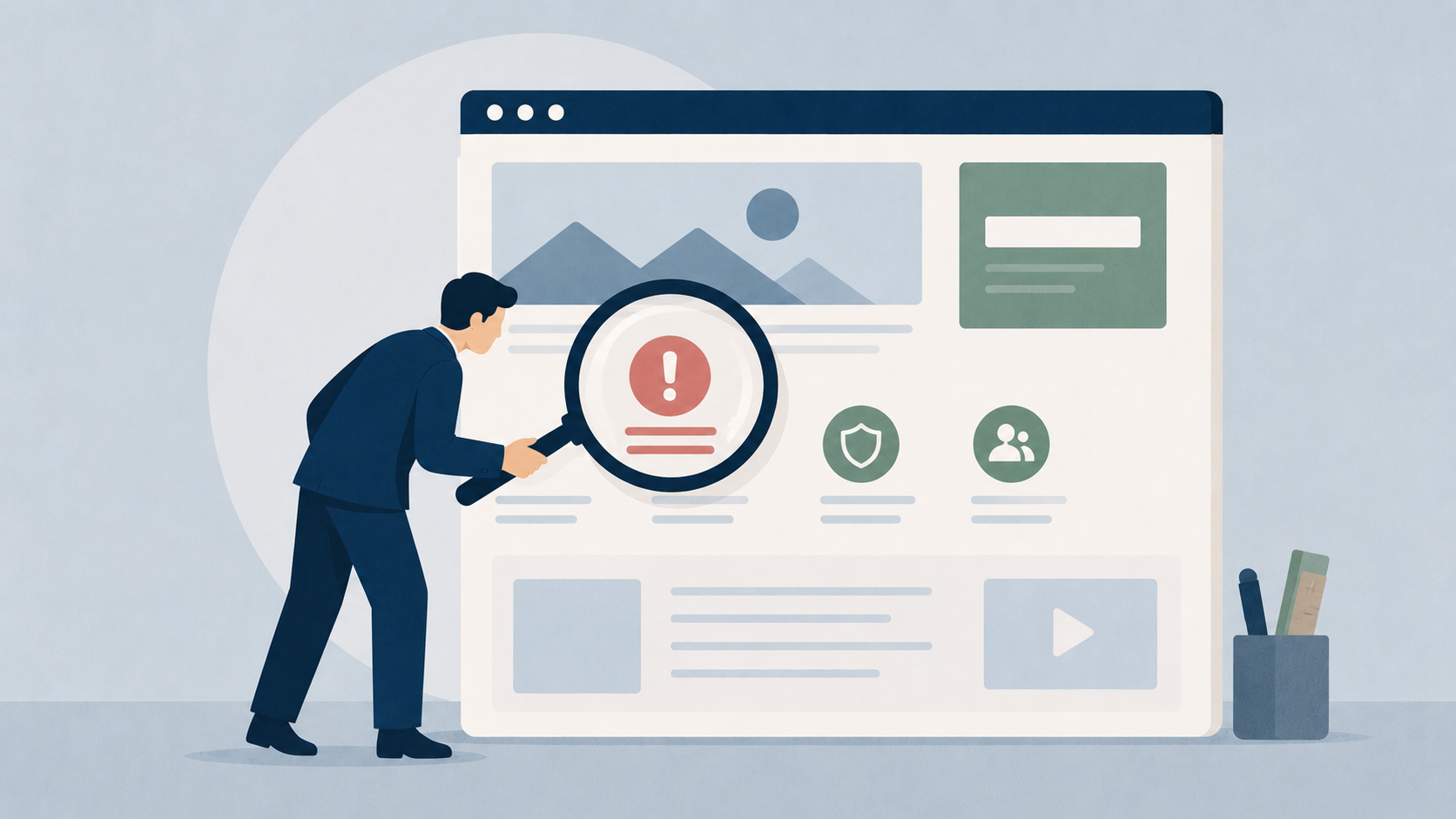
It looked beautiful. Clean design, good photography, professional copy. It had all the right elements—at least on the surface. But within sixty seconds, I spotted the problem: five different calls to action, all competing for the same visitor’s attention. No clear next step. No single door to walk through.
As Don Miller says, “If you confuse, you lose.”
I asked Claude to audit the site with one specific goal: double conversions. Tell me what’s working. Tell me what’s not. Rank the issues in priority order and explain why each one matters.
The output stunned me.
When I shared it with my client, they sat quietly for a moment, then shook their head. “This is so obvious in retrospect,” they said. “And it looks pretty easy to fix.”
I’m about to show you how to do the same thing.
You can use AI to run a website conversion optimization audit and walk away with a prioritized improvement plan that a digital marketing agency would charge $5,000 to $25,000 to produce.1 Here are five steps to do it yourself in a single afternoon.
Step 1: Diagnose the Real Problem First
The median website conversion rate is 2.35 percent. Top-performing sites convert at more than 11 percent.2 That’s nearly a five-to-one gap. Closing it is the heart of conversion rate optimization—and most of the work doesn’t require an agency.
Most business owners, when sales are flat, reach for more traffic: more ads, more social posts, more email blasts. But if your site isn’t built to convert, more traffic just means more waste. You’re pouring water into a bucket with a hole in it.
Your website has one job: move a visitor toward one specific action. Not five actions. One. Before you open AI, answer this question: what is the single action you most want a visitor to take? Book a call. Buy a product. Subscribe. Request a quote. Pick one. If you can’t choose, your visitor can’t either. They’ll leave.
Step 2: Train AI Like a $25,000 Consultant
Most people type “audit my website” into an AI tool and get a generic checklist that could apply to any site on the internet. That’s not an audit. That’s a template.
To get results worth acting on, you have to teach AI what to look for first.
Before you paste in your URL or describe your site, load your AI session with context. Tell it your one conversion goal, who your ideal customer is and what they fear or want most, where your traffic comes from (organic search, paid ads, email, or referrals), and what kind of report you need: a written punch list in priority order, with the reason behind each item.
Then ask AI to evaluate your site against the key conversion levers: Is your offer clear? Not just visible—does it have a specific name? “Contact Us” is a button; “Book Your Free Strategy Session” is an offer. AI will flag the difference, and it’s usually the single highest-impact fix on the list. Is there one obvious, compelling call to action? Is there enough trust? Is it easy to say yes? Does the message match what the visitor actually wants? The Implementation Kit below has the full framework for this. But naming these questions in your prompt shifts AI from a copyeditor to a conversion strategist.
That’s the difference between a useful report and a generic one.
Step 3: Give AI Access to Your Site
Now you’re ready to run the AI website audit.
You can give AI access to your site a few ways. Paste the text of your homepage directly into the chat window. Describe each page section by section. Or, if your AI tool supports web browsing (Claude and ChatGPT both do), simply provide the URL and let it read the page directly.
Start with your homepage and your conversion endpoint: the contact form, checkout page, or booking page where visitors are supposed to take action. These two pages account for most of your conversion result.
Ask AI to tell you what the site does well and what to protect, what’s working against your one conversion goal, and how to rank the problems in priority order by impact relative to effort, with the reason each item matters. That last instruction is the difference between a list and a plan. Reasons help you, and any agency or developer you eventually hand this to, understand what’s at stake and why the order matters.
Step 4: Read the Results Like a CEO
The report will likely surprise you. Not because the problems are exotic, but because they’re obvious in retrospect—and you were too close to see them. Read through the full output once without touching anything. Resist the urge to defend the site.
Then do one thing: find the first recommendation on the list.
In almost every audit, the top one to four items are where a step-change in conversions comes from. The rest compound it over time, but the first few move the needle fastest.
Look at that top item. Can you do it yourself? Change the headline, update the button, simplify the form? If so, do it this week. A changed headline on a live page beats a flawless redesign that never ships.
Step 5: Turn the Report Into Action Without Starting from Scratch
A website conversion audit doesn’t make digital marketing agencies obsolete. You still need someone to build or redesign the site, run tests, and implement changes at scale. What the audit changes is the starting point.
Instead of walking into an agency meeting with a vague brief (“we want more leads”), you walk in with a prioritized, reasoned report that tells them exactly what to fix, in what order, and why. You’re not starting from ground zero. You’re directing the work.
The report you generate in a single afternoon can serve as your immediate action list for quick fixes, a handoff to a developer for medium-lift changes, or a brief for any agency you bring in. You arrive at that meeting already ahead.
What’s Possible
Most websites are working against their owners. They look professional, they tell the right story, and they fail the visitor who arrives ready to act.
You now have the tool to change that. It’s free, it takes an afternoon, and you already have everything you need.
Imagine what becomes possible when your website stops being a brochure and starts being your best salesperson: more leads from the traffic you’re already paying for, a cleaner path to yes, fewer dollars wasted driving visitors to a page that doesn’t convert.
The audit won’t redesign your site. But it will tell you exactly what’s broken, what to fix first, and why it matters. That’s a better starting point than most businesses ever get.
What is the one change your website needs most, and what’s been stopping you from making it?
Comments
If you have a question about using AI to optimize your website conversions, click here to send me an email. I read every one. Seriously. Your experiences help me write better content, and sometimes the best insights come from readers like you.
Transforming AI from noise to know-how,

P.S. Consider the AI Business Lab Mastermind: Running a $3M+ business? You’re past the startup chaos but not quite at autopilot. That’s exactly where AI changes everything. The AI Business Lab Mastermind isn’t another networking group—it’s a brain trust of leaders who are already implementing, not just ideating. We’re talking real numbers, real strategies, real results. If you’re tired of being the smartest person in the room, this is your new room. 👉🏼Learn more and apply here.
REFERENCE
- James Fratzke, “How To Conduct a Digital Marketing Audit in 2026 (Step-by-Step Guide)”, Fratzke Media, May 29, 2026. ↩︎
- “Conversion Rate Benchmarks 2026: Industry and Channel Data”, Digital Applied, April 5, 2026. ↩︎