

WEEKLY NEWSLETTER
Does Your AI Assistant Have a Job Description?

© CURRENT YEAR, AI Business Lab. All rights reserved.
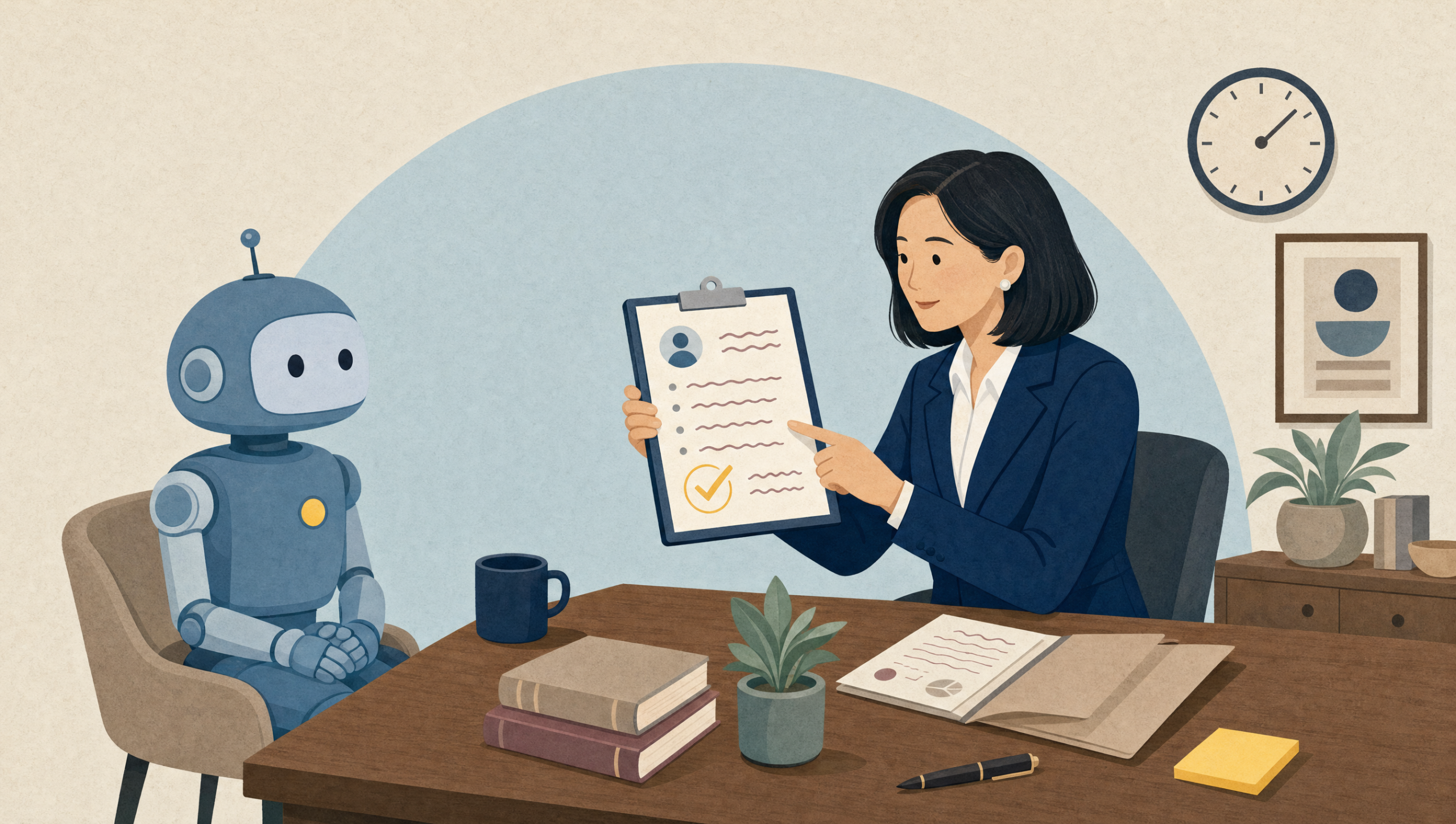
Would you hire one person to run sales and book your travel? That’s what you’re asking your AI assistant to do.
Stefan Gruber had been on my team for one day when I introduced him to the Dragonfly Mastermind. “I actually just built him yesterday,” I told them. His portrait showed a man with short graying hair in a dark blazer, my new Chief Revenue Officer.
On October 20, Glinda Makewright, my Fairy Bot Mother, built him with me. She asked her questions one at a time. I answered most of them with a tap. The mission, the anti-jobs, the voice. All of it came out of that conversation.
Then I showed them his anti-jobs. Stefan has five. He never sends an email or text to a prospect without my approval. He drafts, I send. He never quotes prices, discounts, or payment terms I haven’t approved. No pressure tactics, false urgency, or manipulation. He never contacts anyone who has asked not to be contacted, and he never shares one prospect’s details with another. Those lines are why I can trust him with real prospects.
A general helper has none of those lines. No title, no mission, nothing it must never do. You can ask it anything, and that is exactly the problem.
Odds are you have one AI assistant doing everything. If you’ve ever searched for how to build an AI agent, you found plenty of tutorials and very little about how to build a team.
You should hire each of your AI employees instead of leaning on one general helper, because vague hires produce vague work, with people and with bots. It takes four moves.
Move #1: Hire Each Bot With a Mission, a Title, and a Set of Anti-Jobs
Start with one bot. Don’t overwhelm yourself. Pick the role that would give you the most relief this month, probably your chief of staff.
Write the mission first. Stefan’s opens with, “My mission is to help you grow high-ticket revenue, especially private coaching and mastermind sales, with precision and heart.” Under it sits a job description: discovery call scripts, call reviews, a pipeline dashboard, and follow-up drafts I approve and send.
Gallup’s 2024 U.S. data found that just 46% of employees clearly know what is expected of them at work, down 10 points since March 2020.1 If people struggle to know what’s expected, a bot with no job description has no chance.
Next, the anti-jobs. Write yours before you turn a bot loose. They’re your AI guardrails.
Then a title. A title tells the bot what it owns and tells you what to expect. Last, a face and a voice. Stefan’s voice: calm, exact, data-first, and warm, with the occasional German phrase and a translation in brackets.
Move #2: Connect the Tools It Needs, Read-Only for Money
Connect the basics first. Email lets the bot read, sort, and draft. Your calendar lets it see and protect your time. Contacts tell it who’s who. Then credentials. I use 1Password, so a bot can use a login without my ever pasting a password into a chat. The bot gets in. The password stays put. Grok Bot now has its own vault in Settings, where you can store logins too.
Then add the tools for the job. Grok Bot calls these plugins, and they follow the role:
- A graphic designer bot can create images and work on your designs in a tool like Figma.
- A social media manager bot can schedule your posts and watch your DMs through a tool like Zernio.
- A finance director bot can see your sales in Stripe, plus your bank and brokerage balances.
All my financial plugins are “read-only.” The bot can see the numbers. It can’t move them. That single permission is one of my firmest AI guardrails. Gartner predicts that by the end of 2027, 40% of agentic AI projects will be canceled, and it names inadequate risk controls as one of the reasons.2
Move #3: Add Routines So It Proposes and You Approve
Everything so far happens when you show up and ask. Routines flip that. This is where the team starts working while you sleep. A routine is a job your bot does on a schedule, without being asked.
Clara alone runs more than two dozen routines. She’s my chief of staff, and here are three of them:
- Daily Briefing, every morning at 6:50 a.m.
- Meeting Summaries, weekdays at 11:00 a.m., 3:00 p.m., and 6:00 p.m.
- Commitment Sweep, every evening at 6:00 p.m. She scans the last twenty-four hours for promises, proposes tasks, and waits for my yes. I unpacked it in How I Use AI So Nothing Slips Through the Cracks.
Mina, my correspondence director, runs Inbox Triage at 8:00 a.m., 11:30 a.m., and 4:30 p.m. She sorts my inbox and suggests replies, but she never sends one.
Notice the pattern. They propose. I approve.
Stefan has three routines of his own: a Monday pipeline review with next steps, a daily dashboard update, and alerts when follow-ups are due.
Move #4: Use a Bot to Build Your Bots
Meet Glinda Makewright, my Fairy Bot Mother, a Grok Bot template. She walks you through the first three moves. Her line: “I help every user turn a wish into a working Grok Bot, without the fuss.”
She interviews you. Then she builds. Four steps:
- Tell her what you want the bot to do.
- Pick a face. She refines the portrait until you’re happy.
- Answer her questions, one at a time, mostly a tap. On demand or on a schedule? How should it sound? What must it never do? Which tools?
- Say yes, and she builds it. Then comes a supervised first run, where the bot shows you what it would do without sending or changing anything.
She built Stefan with me. She’s part of this week’s Implementation Kit for Insider+ subscribers.
Gallup recommends two-way conversations to set expectations, and says expectations become clear when they are “collaboratively set and prioritized.”3 Gallup meant people. Glinda’s interview does the same for a bot.
This approach works in almost any bot platform. Deciding which bot to hire next? I laid out the whole team in Your AI Org Chart Is Finally Here.
Start With One Hire
Four moves. Hire one bot with a mission, a title, and anti-jobs, the way I hired Stefan. Connect its tools, read-only for money. Add routines so it proposes and you approve. Then let a bot build the next one. That’s how to build an AI agent you can trust, and how one general helper becomes a team of AI employees. Pick one role and hire it now.
Imagine a Monday. Your chief of staff has your briefing ready at 6:50 a.m. Your inbox has been sorted three times, and what needs you sits on top. At 6:00 p.m. the promises you made today are waiting for your yes. The hour you used to spend in your inbox went to the one problem only the CEO can solve.
Which bot will you hire first?
Comments
If you have a question about giving your AI assistant a job description, click here to send me an email. I read every one. Seriously. Your experiences help me write better content, and sometimes the best insights come from readers like you.
Transforming AI from noise to know-how,

P.S. Consider the AI Business Lab Mastermind: Running a $1M+ business? You’re past the startup chaos but not quite at autopilot. That’s exactly where AI changes everything. The AI Business Lab Mastermind isn’t another networking group—it’s a brain trust of leaders who are already implementing, not just ideating. We’re talking real numbers, real strategies, real results. If you’re tired of being the smartest person in the room, this is your new room. 👉🏼 Learn more and apply here.
REFERENCE
- Jim Harter, “U.S. Employee Engagement Sinks to 10-Year Low”, Gallup, January 13, 2025. ↩︎
- “AI Agent Success Requires Reliability Before Autonomy”, Gartner, October 2, 2026. ↩︎
- Ben Wigert and Corey Tatel, “The Great Detachment: Why Employees Feel Stuck”, Gallup, December 2, 2024. ↩︎